
STRATEGIES:
5 AREAS OF FOCUS AND SUPPORT
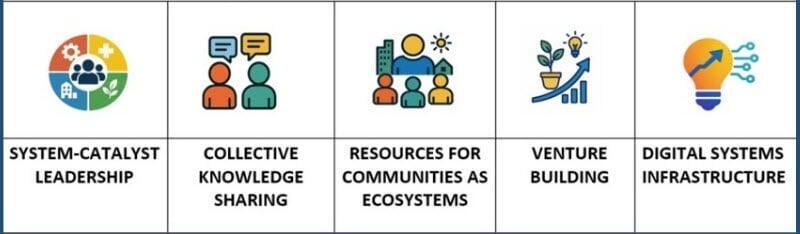
Once a decision is made to apply a RESET Communities approach, a community or neighbourhood can contract support and services or, if available, receive a sponsorship, to actively engage and be supported to apply the five strategies explained below:
Strategy 1:
Systems-Catalyst Leadership (Community and Economic Development)
.
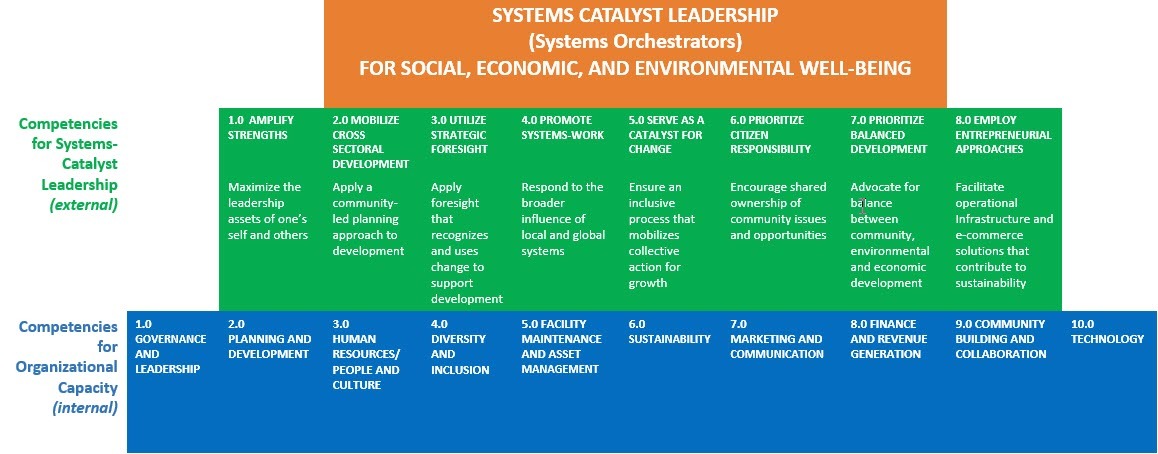
Two areas of specialization are available, with options for formal certification:
1. Systems-Catalyst Leadership (external)
2. Organizational Capacity Leadership (internal)
These programs are tailored for students in colleges, universities, as well as for professional development. They are designed to ensure neutral, competency-driven practitioners equipped to ensure social and systems change and innovation.
Competencies for SYSTEMS CATALYST LEADERSHIP strengthen capacity for local community and economic development) by providing practical learning opportunities for neutral orchestrators and ecosystem builders (an emerging new discipline). Not all individuals within an organization, business, government, or community will require these competencies (skills, knowledge, and attitudes) because they are focused on competencies identified as essential for transformative innovation and systems change in the external broader community. but they are essential for those needing to play a vital role in uniting and innovation in the broader community. However, they are criticial for merging the collective wisdom of businesses, social purpose organizations, government entities, and community members.
ORGANIZATIONAL CAPACITY LEADERSHIP for Social and Systems Change provide insights that enhance the future-readiness of social purpose organizations and businesses by ensuring readiness and capacity for reframing their communities as ecosystems rather than a series of isolated silos, and ensuring their internal capacity for transformative change.
All learning uses a unique, practice-based approach, with peer-to-peer exchange as a key component, grounded in these competencies. Additionally, the learning is based on well-proven competencies (skills, knowledge, attitudes) that have been developed and tested over many years.
Strategy 2:
Collective Knowledge Sharing and Exchange
This strategy adopts an approach for strengthening an organization's capacity for social and systems innovation. By creating structured yet informal opportunities for networking and knowledge sharing, valuable insights and promising practices are shared peer-to-peer and across multiple networks. Ultimately this fosters a vibrant learning ecosystem that accelerates innovation and inspires breakthrough ideas.


Strategy 3:
Resources for Strengthening Communities as Ecosystems
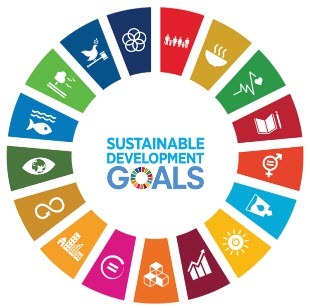
Providing intensive support, coaching, and measurement for pilot communities and neighbourhoods, this strategy supports and enables local leaders (with or without a formal title) to apply hyper-local, whole-community, integrated processes framed within the UN 17 SDGs. It supports communities in identifying local priorities and opportunities, mobilizing diverse stakeholders, and initiating quick-win ventures as well as longer term systems innovation and transformative change that builds confidence and momentum for community and economic well-being.
Strategy 4:
Venture Capacity Building
This strategy is designed to catalyze and amplify practical opportunities for community wealth building for entrepreneurs by strengthening their capacity. This is done by supporting ventures through two critical phases: Impact Readiness Assessment and Opportunity Matching. By connecting enterprises with private, public, and philanthropic capital and partnerships. This strategy ensures innovative solutions can scale and deliver measurable impact.


Strategy 5:
Digital Systems Infrastructure
Leveraging IT systems and AI-driven tools, this strategy establishes the digital backbone for ongoing support of two interconnected networks: a (1) Community of Practice (CoP) for Systems Catalysts and an (2) local and regional Integrated Platforms connecting communities, neighbourhood members, and networks. Digital infrastructure enables coordination, learning, and real-time adaptation across the RESET ecosystem and to scale beyond.
R.E.S.E.T. Communities Collective increases responsiveness to complex challenges and opportunities by collaborating with multiple partners to provide a variety of support and services that enhance social, economic, and environmental well-being.
Future-readiness is increased by supporting capacity for (1) community-led development, (2) systems-practices, (3) strategic foresight, and (4) AI and digital optimization. We've learned these four components are necessary for the project and systems collaboration and informed decision-making that are essential for transformative change and innovation.

Innovative approaches require being bold, perseverance, tenacity and a sprinkle of panic.
-- Michelle Baldwin
Many situations in life are similar to going on a hike: the view changes once you start walking. You don't need all the answers right now. New paths will reveal themselves if you have the courage to get started.
--James Clear
Leadership today is about courage. Courage to realize our challenges are complex and no one individual, organization, or sector can resolve them on their own. That means we have to let go of the idea that we alone have the answers. Instead, we need to strengthen our individual and organizational competencies in order to become sector connectors who call meetings before we have the answers, aren't intimidated by messy, and can ensure a culture where all voices are heard. Only then, can our collective gifts, experience, and wisdom be focused on building a better future for all.
--Brenda Herchmer
In times of change it is the learners who inherit the future. Those who have finished learning find themselves equipped to live in a world that no longer exists.
-- Eric Hoffer