OUR GUIDING VALUES AND PRINCIPLES
This document summarizes the Values and Principles that serve as a North Star for guiding our work with communities, partners, and systems.
Ultimately, it is about change and the direction we are moving toward together, knowing that every place will start from a different reality, with various constraints, opportunities, and histories. Additionally, leadership, organizational, and community capacity will differ.
Our VALUES
From the grassroots to global levels, values are shifting toward recognizing the critical role of interconnected systems. As a result, early signals suggest that cross-sector and systemic collaboration are emerging as a priority. Organizations, businesses, governments, and community members are beginning to embrace systems innovation and impact as an effective path to sustainable, equitable solutions for the most pressing local and global challenges.
We recognize that not all of our values are entirely in place in every context. The intent is that they will guide how we design our work, support partners, and make trade-offs when difficult choices arise.
Our work embraces these values:
Well-being: advancing and balancing social, environmental, cultural, and economic well-being for people and place.
Inclusion: ensuring everyone feels valued and has genuine opportunities to participate in shaping their community, fostering a sense of belonging.
Respect for diversity: honouring all cultures, backgrounds, and local knowledge as being essential for informed, impactful decisions.
Asset-based mindset: viewing communities as 'half full' rather than 'half empty', focusing on existing leadership, organizational, and community strengths, relationships, and resources.
Self-determination: supporting communities to lead their own change, at a pace and in ways that make sense locally.
Sustainability: balancing quality of life with economic development, not only for short-term gain, but long-term as well.
Collaboration and trust: investing in trusted relationships that are the foundation for collaboration and change.
Equitable shared ownership: Moving incrementally toward fairer sharing of resources, assets, and decision-making power among participants.
Willingness to embrace the messy:
The solutions for today's complex issues and opportunities are rarely linear. The resulting initial lack of clarity often requires a willingness to begin without all the answers, to listen and learn from one another, and to embrace organic growth to achieve transformative change.
Guiding PRINCIPLES for delivering our values and how they shape our COACHING Work
These principles describe how we aim to live our values in practice, fostering shared understanding and continuous learning as we approach our work.
We honour the following Principles as being core to our coaching work with communities: | How these Principles shape our COACHING work: |
|---|---|
Trusted Relationships: Trusted relationships are vital to partnerships and collaborations that drive sustainable solutions. We recognize the importance of investing time and patience, especially where there is a history of top-down approaches and/or little emphasis on cross-sector collaboration. |
|
Diversity Drives More Innovative Solutions and Impact:The more diverse the mix, the more inspiring the solutions. Differing perspectives across social, cultural, environmental, and economic perspectives lead to more innovative, inclusive, and ultimately more transformative and practical solutions. |
|
Community-Driven Development: We prioritize initiatives led by the people most affected, emphasizing local leadership to address multiple determinants of community well-being and their interconnectedness. |
|
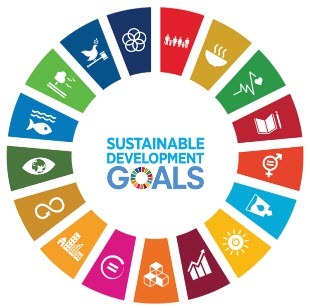
Global-Local Alignment:We connect local action to global frameworks, such as the UN Sustainable Development Goals (SDGs), so that social, environmental, cultural, and economic goals reinforce one another. |
|
Systems-Catalyst Leadership for Complexity: We support the capacity of community leaders (with or without formal titles) to lead and adapt in complex, multidimensional environments. |
|
Balanced Impact-Driven Outcomes: We balance economic outcomes with positive social, environmental, and cultural impact. |
|
t box.
R.E.S.E.T. Communities Collective increases responsiveness to complex challenges and opportunities by collaborating with multiple partners to provide a variety of support and services that enhance social, economic, and environmental well-being.
Future-readiness is increased by supporting capacity for (1) community-led development, (2) systems-practices, (3) strategic foresight, and (4) AI and digital optimization. We've learned these four components are necessary for the project and systems collaboration and informed decision-making that are essential for transformative change and innovation.
Innovative approaches require being bold, perseverance, tenacity and a sprinkle of panic.
-- Michelle Baldwin
Many situations in life are similar to going on a hike: the view changes once you start walking. You don't need all the answers right now. New paths will reveal themselves if you have the courage to get started.
--James Clear
Leadership today is about courage. Courage to realize our challenges are complex and no one individual, organization, or sector can resolve them on their own. That means we have to let go of the idea that we alone have the answers. Instead, we need to strengthen our individual and organizational competencies in order to become sector connectors who call meetings before we have the answers, aren't intimidated by messy, and can ensure a culture where all voices are heard. Only then, can our collective gifts, experience, and wisdom be focused on building a better future for all.
--Brenda Herchmer
In times of change it is the learners who inherit the future. Those who have finished learning find themselves equipped to live in a world that no longer exists.
-- Eric Hoffer